The Common Mindset: "The Trail is Exactly the Same, Right?"
It is completely natural to look at a premium price and a budget price side-by-side and feel skeptical. A very common thought among travelers is:
"Even though standard or high-end service-oriented trek prices are what actually make a proper trek possible, common thinking suggests otherwise. Whether we call it a cheap budget trek or a luxury trek, you look at the exact same mountains, pay the exact same price for the plane ticket, walk the exact same trekking route, and stay in the exact same accommodation areas—or at most, just one or two similar lodges. So why throw away money and pay more for nothing?"
We completely understand this logic. In fact, that is precisely why organized group treks are so popular—they allow you to split fixed overhead costs like guides and porters to enjoy an affordable experience, leaving you to simply pay for your personal extra comforts along the way.
Our goal here is not to discourage economy travel or look down on independent budgeting. Doing so would be entirely unethical. Everyone has their own unique traveling style. Some independent solo trekkers manage their logistics brilliantly on a minimal budget, while other solo travelers prefer a fully guided premium setup for peace of mind. Both approaches are completely valid.
What we want to discourage are the hidden traps.
Many low-cost operators advertise a generic, dirt-cheap upfront price solely to catch your eye. But once you are on the mountain, you find out the porter cost is a mandatory extra fee, your meals are restricted to a tiny, fixed set of basic starches, and you are trapped paying massive out-of-pocket expenses just to survive comfortably.
At Rugged Trails Nepal, we don't want to just make a blanket claim that we are "better" than other companies. Instead, Rugged Trails Nepal does things differently. We intentionally focus on running trips for a limited number of clients. We don't mass-market tours. By keeping our operation tight and focused, we run our expeditions exclusively through our own permanently employed, highly trained staff who understand high-altitude safety, group pacing, and transparent hospitality inside and out.
The Real EBC Cost Breakdown
To budget accurately, you need to understand the structural expenses of the trail. Here are the realistic costs for the standard Everest route:
1. Fixed Permits & Air Logistics
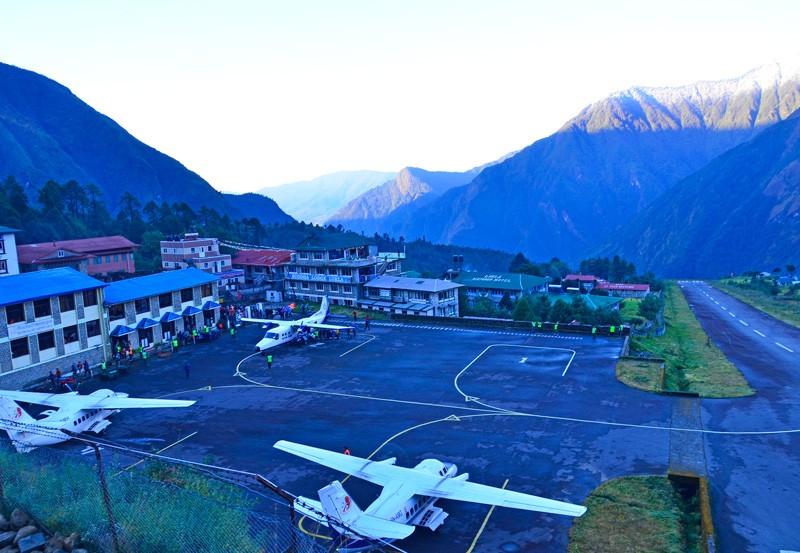
- The Lukla Flight: Flights between Kathmandu (or Ramechhap during peak traffic seasons) and Lukla are fixed commercial rates. Round-trip fares for foreign nationals typically run between $430 and $500. While it's an expensive 35 minutes, it saves days of walking.
- Required Permits: To legally enter the region, you must pay the local Khumbu Pasang Lhamu Rural Municipality Permit (NRs 3,000 / approx. $22) and the Sagarmatha National Park Entry Permit (NRs 3,000 / approx. $22). Children under 10 are exempt from the national park fee.
- Travel Insurance: Do not rely on standard credit card policies. Reputable operators require a dedicated policy (typically $100 to $150) from providers like World Nomads or SafetyWing that explicitly covers medical expenses, high-altitude trekking, and helicopter evacuation up to 6,000m. Since we do not partner with or have any affiliate links with these companies, you can read about honest reviews and recommendations from our past travelers' experiences in our comprehensive 👉 Best Travel Insurance For Nepal Trekking Guide.
2. Daily Expenses on the Trail
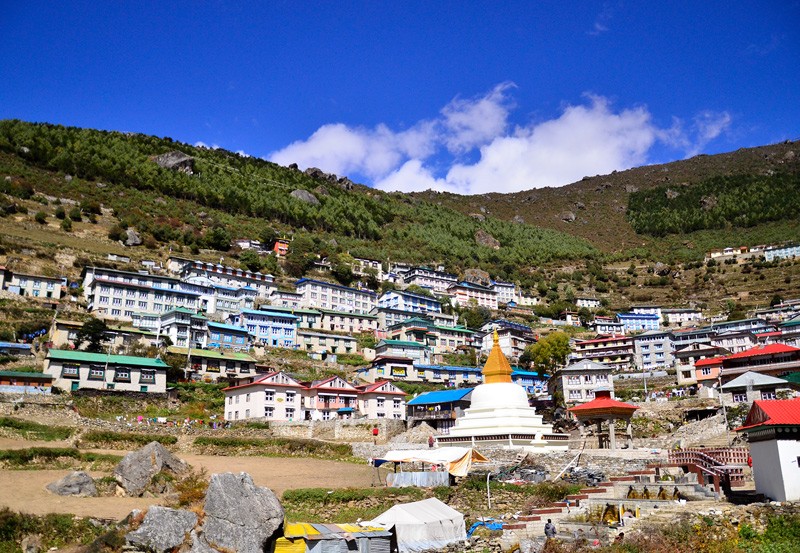
- Food & Drinks: Supplies must be flown into Lukla and carried up by yaks or porters, meaning prices rise with the altitude. Plan on $20 to $30 per day for meals. A classic, high-calorie mountain staple like Dal Bhat costs roughly $5 lower down and up to $10–$12 at Gorak Shep (usually with free refills!). Bottled water ranges from $1 to $4 a liter—bringing a personal water purification system (tablets or specialized filter bottles) can easily save you $50 to $100 over the course of the trip.
- Teahouses & Comforts: A basic twin-share room in a local teahouse costs around $5 to $15 per night. However, budget travelers must remember that amenities like hot showers ($3–$5), device charging ($2–$3 per battery), and Wi-Fi access are always sold as extras on the trail. Budgeting a total of $30 to $50 a day allows for a comfortable, self-supported trek. Remember to carry ample cash in Nepali Rupees (NPR); there are zero operational ATMs past Namche Bazaar.
- Trekking Gear: If you don't own gear, a complete baseline kit (sub-zero sleeping bag, heavy down jacket, layers, broken-in trekking boots) will cost $300 to $500 to buy new. To save money and support sustainability, you can rent excellent-quality down jackets and sleeping bags in Thamel for just $1 to $2 a day. If you want a complete breakdown on how and where to arrange your equipment in Kathmandu, explore our complete gear rental guide: 👉 Where to Buy and Rent Trekking Gear in Nepal
3. Guides, Porters, and Tipping Ethics
- Staff Salaries: Hiring a certified guide averages $25 to $55 per day, while an experienced porter costs $25 to $35 per day (carrying a maximum weight of 18kg. This support ensures smooth navigation, handles lodge booking logistics, and offers an essential safety net.
- Tipping Guidelines: Tipping is deeply ingrained in the local mountain culture and directly impacts family livelihoods. While not legally mandatory, it is a crucial way to honor your crew's hard work. A standard baseline guideline is to tip $10–$15 per day for your porter and $15–$20 per day for your guide. For a standard 12-day trek, expect to allocate $60–$120 for a porter and $120–$180 for a guide. If you are part of a group trek, these tips are typically pooled together and handed over directly during a farewell dinner at the end of the trek.
Understanding the Seasons: The True Technical Risks
A standard EBC itinerary takes 12 to 14 days (typically 8 days up, including 2 vital acclimatization rest days at Namche and Dingboche, and 3 to 4 days down). When choosing when to go, you must separate internet myths from actual high-altitude geography:
- The 12-Day vs. 14-Day Itinerary Difference: If you are comparing our 12-day and 14-day options, the key difference lies in your city logistics. The 12-day itinerary covers the complete cost of your trip from Kathmandu to Kathmandu (flights, trail costs, etc.), but it does not include your accommodation in Kathmandu. The 14-day itinerary is our standard, fully integrated plan, which includes 2 nights of hotel accommodation in Kathmandu (one before and one after the trek) to give you a seamless, stress-free arrival and departure.
- The Peak Seasons (March–May & September–November): These windows offer the most stable weather, clearest mountain views, and warmest trekking temperatures, though flights and trails are at their busiest.
- The Monsoon Reality (June–August): Unlike lower-altitude regions or overland road trips (such as driving via Surke, where heavy rains cause major roadblocks and landslide hazards), the main fly-in trekking trail above Lukla is solid, rocky, and does not carry a major landslide risk. The true risk here is entirely weather-driven air safety: low clouds and poor visibility cause massive, multi-day flight delays or cancellations at Lukla Airport.
- The Winter Reality (December–February): While winter offers crowd-free trails and lower off-season pricing, it is physically restrictive. It is not just about braving freezing temperatures; heavy seasonal snowfall can physically choke the high-altitude passes past Dingboche or Thukla. When this happens, the upper trails become entirely impassable, preventing anyone from reaching Gorak Shep or Everest Base Camp safely.
The Reality of Difficulty: It is Non-Technical, But It is Hard
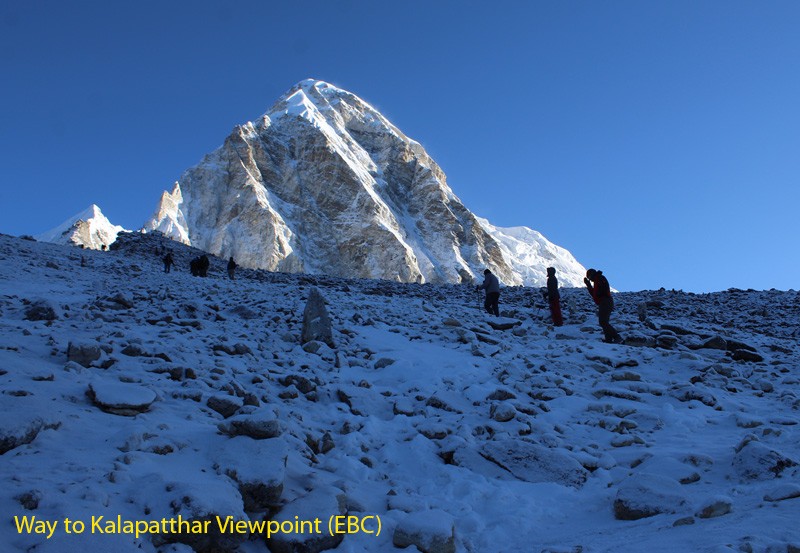
Let’s bust another common online myth: The Everest Base Camp trek is not an easy walk, but it is also not a technical climb. You do not need climbing ropes, crampons, or ice axes to reach Base Camp. However, it is a strenuous high-altitude endurance test.
Unlike companies focused purely on volume, we refuse to market this trek with a generic, misleading "all beginners are welcome" promise. Your safety is too important to us.
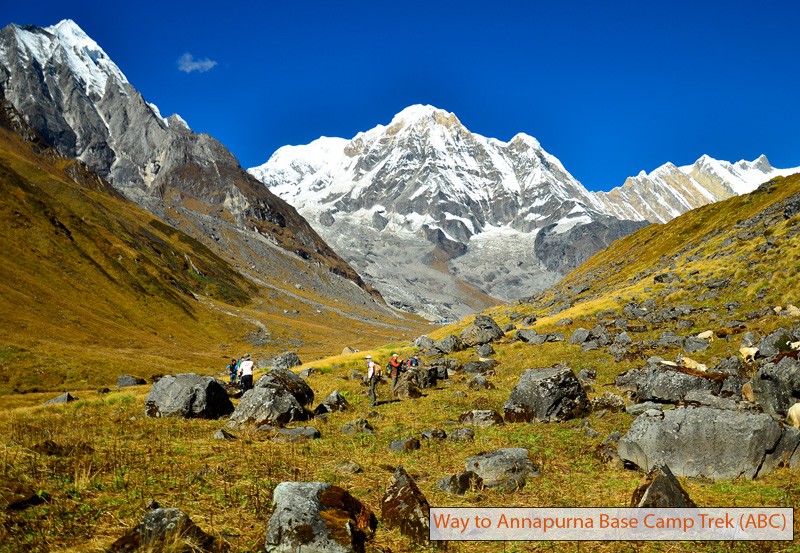
If you have absolutely no previous hiking or trekking experience, we strongly advise against starting your journey with Everest. Instead, we highly encourage you to pick an excellent preparatory trek first—such as the Annapurna Base Camp (ABC) trek or the scenic Langtang Valley trek. Taking on a pre-trek helps your body learn how to adapt, builds your physical stamina, and gives you the confidence you need to successfully tackle EBC later.
Before you make up your mind, it pays to know exactly what kind of terrain you will be up against. To help you prepare mentally and physically, read our detailed guide on the following: 👉 What is the Hardest Day on the Everest Base Camp Trek?
Visualize the Route: Complete Day-by-Day Photo Itinerary
To help you experience the trek before you even step foot in Nepal, we have created a comprehensive, day-by-day photo guide. It captures the true highlights, local landscapes, and realistic daily conditions of the entire route, alongside helpful tips about the places you’ll visit.
Take a visual journey with us and explore the day-by-day breakdown here: 👉 Everest Base Camp Trekking Itinerary with Pictures
Got More Questions About the Everest Journey?
We know that planning a trip into the high Himalayas brings up a lot of practical questions about safety, daily trail life, and what to expect. To help you prepare completely, we’ve gathered real feedback from our past travelers and answered the most common doubts—from electricity and Wi-Fi to physical preparation—in our complete guide: Top Searched Everest Base Camp Trek Questions with Answers.
The Rugged Trails Nepal Promise
We don't try to win over travelers by cutting our prices below the threshold of safety or fair wages. Our packages are designed to give you a fully transparent, stress-free experience.
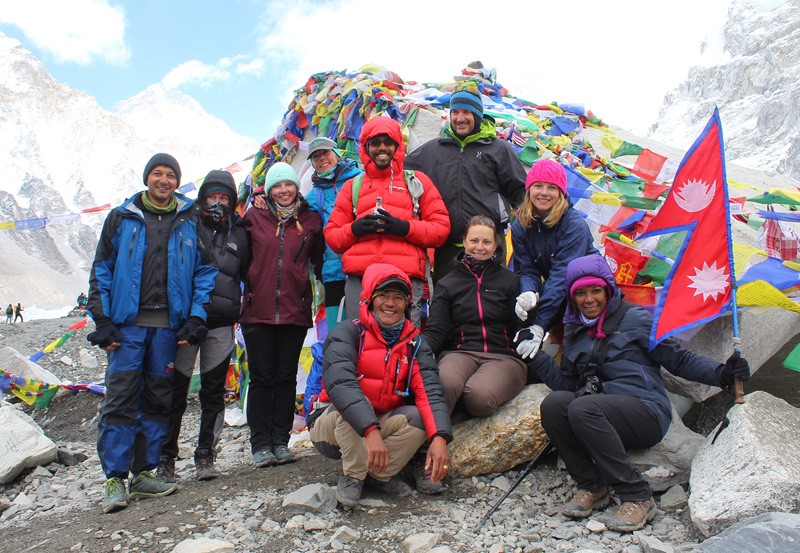
By purposefully capping our trip numbers and relying exclusively on our own trusted, deeply experienced team, we ensure that you are never treated like a commodity on a production line. You get real safety tracking, honest upfront costs, and an authentic connection to the people who call the Himalayas home.
Ready to Plan Your Everest Journey Safely?
Let’s design a transparent, unforgettable itinerary that fits your personal style without compromising on ethical standards or mountain safety.
Option A: The Private, Tailor-Made Experience
Best for couples, families, or independent groups wanting a personal pace and tailored lodge options.
- Solo Travelers (1 Person): Fully private trip starting from $1,800 USD.
- Couples: Fully private trip starting from $1,450 USD per person, sharing ground transportation, double-occupancy accommodations, and your dedicated guide and porter. 👉: Request a Custom EBC Quote
Option B: Small Group Ethical Treks (Value-Conscious)
Split the overhead costs without cutting ethical corners. Join one of our tightly capped private group options.
- Small Private Groups (5 to 10 People): Shared group trip starting from $1,000 to $1,250 USD per person. Even in a group, you retain our classic personal touch and exceptional service standards.
- Safety & Support Ratio: We guarantee 1 porter for every 2 trekkers, your primary lead guide, and—for any groups above 7 people—an extra assistant Sherpa guide to provide maximum safety backup on the trail.
Ready to talk details? Drop our team a message via email or WhatsApp (+977 9851065387). Tell us your timeline, your previous hiking experience, and whether you are looking for a solo tailor-made setup or a small ethical group. Let’s get you safely to the base of the world's highest peak!