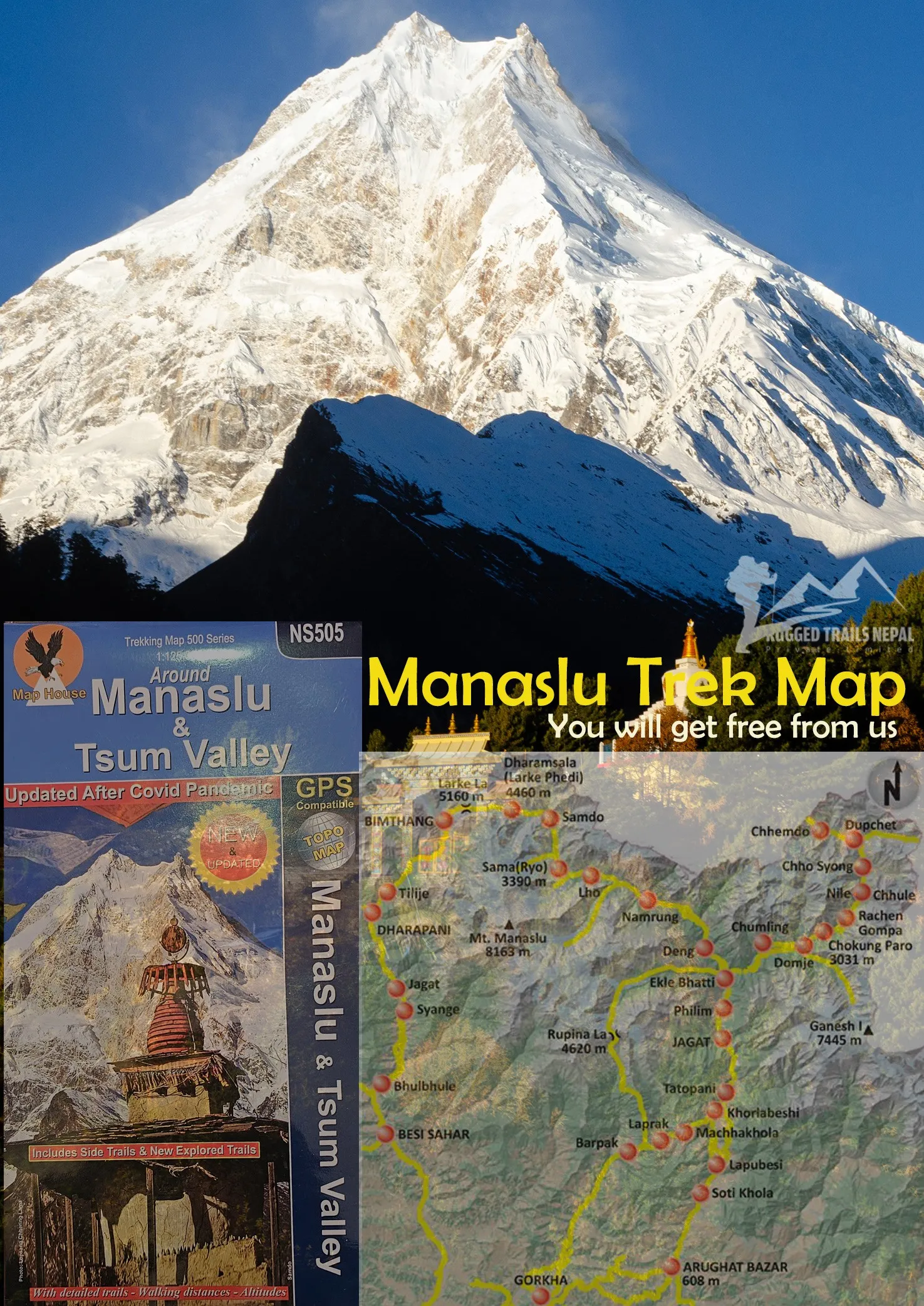
Starts
Kathmandu
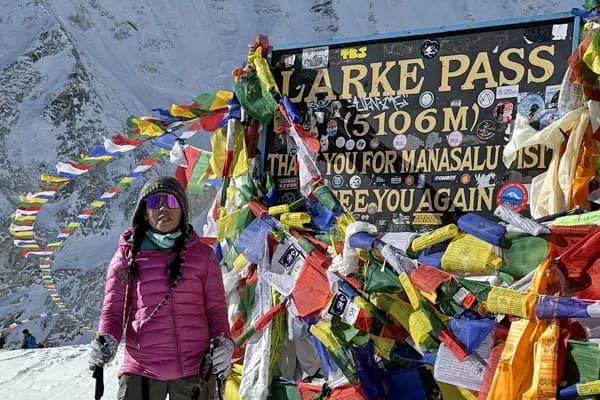
The Short Manaslu Circuit Trek Package is an optimised 11-high-altitude journey designed for active hikers seeking an efficient way to circle the world’s eighth-highest mountain, Mt Manaslu (8,163 m). By utilising the new road access to Philim, this itinerary cuts out several days of lower-altitude walking, allowing you to reach the breathtaking alpine zones of Lho and Samagaon faster than ever. The trek reaches its dramatic climax at the Larkya La Pass (5,106m), offering a 360-degree panorama of over twenty Himalayan peaks, including Annapurna II and Himlung Himal. Throughout the route, you will experience a strictly vegetarian and vegan-friendly food culture, where animal slaughter is prohibited for spiritual reasons, ensuring a truly authentic and peaceful mountain experience. This short circuit is specifically curated for landscape and portrait photographers who want to capture the raw, Tibetan-influenced lifestyle of the Nubri people while staying in modernised teahouses equipped with solar power and reliable NTC connectivity.
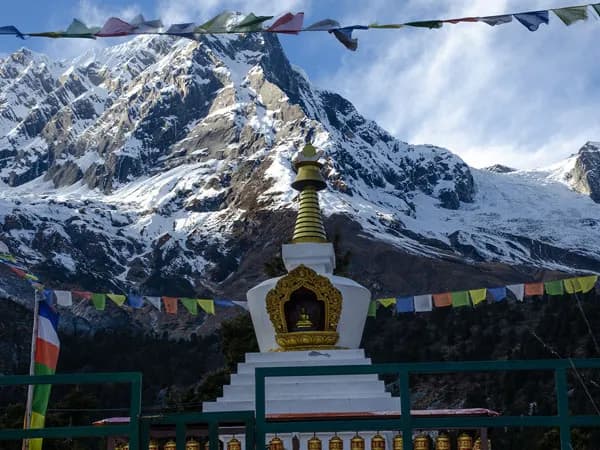
There is no doubt that the Manaslu Circuit is one of the most popular trekking routes in Nepal, but our specialised Short Manaslu Trek trip package makes this epic journey far more accessible by utilising recent infrastructure developments. This is a heavenly trek that touches the very base of the world's eighth-highest mountain, offering a world of towering peaks, yak pastures, and rushing rivers. Along the way, you will discover houses reflecting ancient authenticity, meet the people living within them, and find spiritual peace in monasteries (Gompas) surrounded by Mani walls and colourful prayer flags. Nature here feels like a secluded corner of the world, often making trekkers feel as if they are walking through a fairytale movie forest on their way to the high-altitude wonders of the Himalayas.
The geographical diversity of the Manaslu region is a fascinating mix that changes significantly as you ascend. Up to Lower Ghap village, you will traverse subtropical valleys filled with Gurung settlements and dense jungle terrain. As you reach Shyala and Samagaon, you enter the Middle region, a beautiful alpine entry zone characterised by Tibetan Buddhist culture and forests of rhododendron and juniper. From Samdo onwards, the landscape transforms into a rugged glacial valley with remote Himalayan terrain sitting right on the borderline of Tibet. Finally, the trek concludes in the Bimthang and Tilche areas near Dharapani, where the scenery shifts back to alpine meadows and pine forests at the gateway of the Annapurna Circuit.
One of the greatest highlights of this short Manaslu circuit itinerary is the chance to witness a magnificent panorama of more than twenty major mountain peaks. During the journey, you will see Cheo Himal, Himalchuli at 7,893m, Himlung Himal, Twewa Himal at 6,008m, and Lumbo Himal at 6,250m. Trekkers will also have clear views of Chamar (7,100m), Chhachung (5,996m), Ganesh VII / Puyung (6,676m), Yangra (7,422m), and Ganesh V (6,908m). The view further expands to include Annapurna II (7,937m), Annapurna III (7,555m), Tilicho Peak (7,134m), Kanguru (6,981m), Purpung Himal (6,500m), and the incredible Manaslu East (7,992m). The list continues with Manaslu North, Naike Peak (6,211m), Manaslu North Col (7,100m), Rani Peak, Pangpche I (6,620m), Peak 6693, and of course, the mighty Manaslu main peak standing tall at 8,163m.
The primary reason this short itinerary is possible today is the rapid expansion of the local road network. While the traditional route once began in Sotikhola, the road has now reached Philim, approximately two hours past Jagat, significantly shortening the trekking distance. This progress is largely driven by hydropower mega-projects, and in the future, the road will extend through Samdo to the Tibet-China border. Despite this modernisation, the trail remains an unspoiled alternative to the Everest or Annapurna routes, maintaining its original charm and ancient lifestyle through well-managed trails and enhanced safety measures in difficult sections.
This itinerary covers the journey from Kathmandu back to Kathmandu. To provide you with the best value and flexibility, this package does not include airport transfers, international departure assistance, or Kathmandu hotel stays. We have found that modern travellers prefer to choose their own accommodation standards in the city.
Important Note on Permits: To finalize your permits for the Manaslu Circuit Trek, we no longer require your original physical passport upon arrival in Kathmandu. Instead, the Department of Immigration now processes restricted area permits electronically using your visa information.
"While the trek is the heart of this experience, our support is available 24/7. Whether you need assistance booking a specific hotel, arranging private vehicles, or discovering Kathmandu’s hidden gems before your journey begins, we are here to help. If you prefer a completely hassle-free, all-inclusive experience, we recommend our 15-Day Manaslu Circuit Trek Itinerary. That package covers everything from your initial airport pickup to your final departure, allowing you to focus entirely on the adventure."
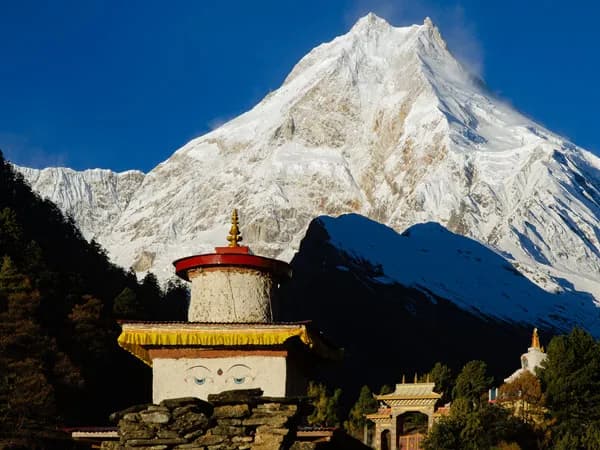
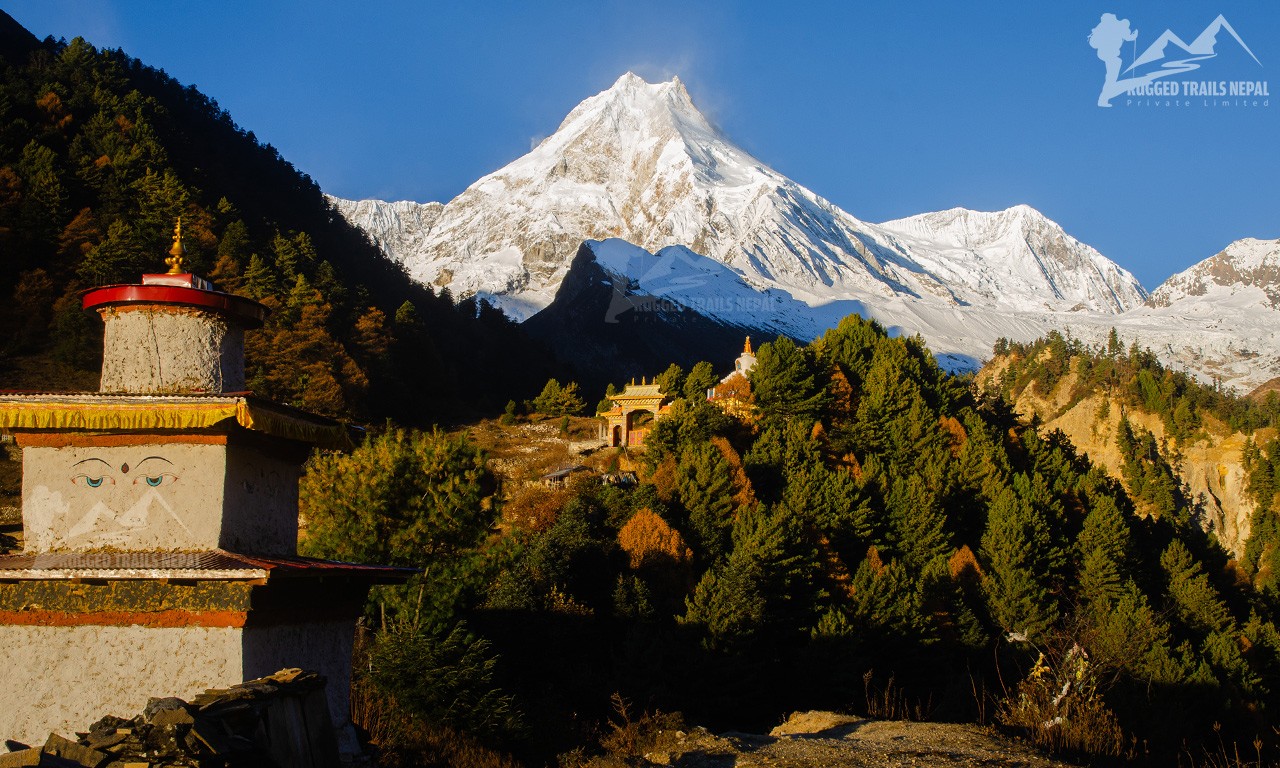
The most iconic and popular images of the Manaslu trek—the ones you see in postcards with the Mt Manaslu peaks, the traditional monastery gate, and the ancient trees—are all captured in Lho Village. For us, trekking isn't just about measuring the distance you walk; it’s about creating lifelong memories. Lho is a photography masterpiece where the sunset and sunrise offer two completely different, breathtaking personalities. We stay here to ensure you have the time to capture that perfect shot.
From Lho, the walk to Shyala is short, allowing us to arrive before lunch. Shyala is a photographer's dream, offering a unobstructed 360-degree view of the Himalayan giants. If you visit during the Spring season, the entire landscape is draped in the vibrant red and pink of blooming Rhododendrons (Laligurans).
While based in Shyala (3,500 m), we take a side trip to Pungyen Gompa (4,040 m). Depending on the weather and your pace, even if we don't reach the monastery itself, reaching the 4,000m mark gives you the incredible feeling of standing at the very foot of the Manaslu glacier, surrounded by turquoise glacial lakes. We return to Shyala to sleep, which perfectly follows the acclimatization rule of "climb high, sleep low".
Following our night in Shyala, the next leg to Samdo is a gentle 3 km walk taking only about 2 hours. Because the distance is so short, we use this day as a "rest and explore" day. This gives us the luxury of time to visit nearby monasteries or take a peaceful walk to Birendra Lake, ensuring you are fully rested and acclimatized before we push toward the high pass.
Accommodation and infrastructure on the Manaslu trek are improving every year. What was once strictly a camping trip has evolved into a teahouse trek with many lodges in Jagat, Lho, and Samagaon now offering concrete buildings with attached bathrooms. While Dharmasala still has limited shared rooms, places like Shyala are seeing a surge in new guest house construction. For the best experience, we recommend carrying a high-quality sleeping bag for hygiene and warmth in the freezing temperatures of Samdo and Dharmasala. For connectivity, NTC SIM cards with data packs are far more reliable than the slow WiFi found in some lodges. Additionally, while every guest house offers hot showers and purified water for a small fee, a portable power bank is essential for solar-reliant areas like Dharmasala.
The food options on the Manaslu trek are surprisingly varied, ranging from the nutritious “Dal Bhat Power 24 Hour” to pasta, pizza, momos, and even bean coffee. It is important for meat lovers to note that animal slaughter is prohibited along this route for cultural and spiritual reasons; therefore, meat-based meals are not available in the teahouses. However, the region is a paradise for vegetarians and vegans, with meals prepared fresh to order. Protein sources like eggs and cheese are easily available everywhere. Furthermore, the region is deeply committed to sustainability, with locals using dried yak dung for fuel and serving organic vegetables from their backyards.
To ensure a safe and successful journey, it is vital to choose the right season. Spring is a favourite for many, as the mountains are still heavily covered in winter snow and the trails up to Shyala are brilliantly decorated with blooming rhododendrons (Laligurans). From early autumn through December, the weather remains exceptionally clear, making it the perfect time for landscape and mountain photography. Because the region maintains its raw and authentic lifestyle, this trek is also highly recommended for portrait and culture photographers looking to capture the traditional lifestyle and people of the Himalayas. Conversely, we do not suggest the monsoon due to landslides or deep winter when heavy snow makes crossing the Larkya La Pass (5,106 m) nearly impossible.
Safety and preparation remain our highest priorities, which is why a licensed guide and mandatory travel insurance covering emergency evacuation up to 6,000m are essential. To assist you, we have prepared a dedicated blog post listing helpful travel insurance providers. This list is based on the real-world experiences of trekkers who have travelled with us. Please note that we are not insurance agents, nor do we specifically suggest one company over another for commission. While local insurance options exist in Nepal, we strongly request that you choose a provider from your home country that is easily accessible and offers reliable support.
Our Short Manaslu Trek trip package focuses on proper acclimatization to minimise the risk of acute mountain sickness (AMS). Preparation is key for active hikers, so we recommend pre-training with cycling, swimming, and uphill walking with a pack. Mentally, you should arrive with a grounded mindset, ready for the "nitty-gritty" of remote travel. Trust your guide, as they are trained to monitor your health and the weather from sunrise until sunset, ensuring that your journey to the world's eighth-highest mountain is both safe and unforgettable.
Choosing a trekking partner is an investment in your safety, your comfort, and your memories. We don't just sell packages; we are authentic experts on the ground. Our information is based on real-time infrastructure updates, and our team is physically present in the Manaslu region to ensure every detail of your journey is managed with precision.
When you book with us, your investment is protected by our commitment to local excellence. We guarantee a level of professionalism that only a local specialist can provide—from navigating permit complexities to selecting the best teahouses in Shyala. Under the new 2026 Nepal trekking rules, the previous requirement for a minimum of two people has been abolished; solo trekkers can now obtain a Manaslu permit for just one person.
Don't leave your Himalayan dream to chance. Join us for the spring or autumn seasons in 2026 and 2027.
Book Your Short Manaslu Circuit Trek Today. Contact us via WhatsApp or email to receive a customized quote and start your permit process.
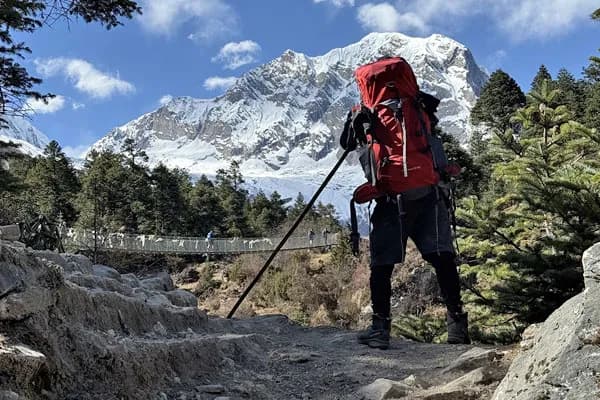
The 6-hour trek from Philim to Bihi is a rugged journey through the most geologically dramatic section of the Manaslu Circuit. Following the Budhi Gandaki River upstream, the trail features relentless "Nepali flat"—steep ascents and descents across narrow cliffside paths and high suspension bridges. This leg is physically demanding due to the constant elevation changes rather than the altitude, requiring sturdy footwear and careful navigation through ancient landslide zones.
The afternoon push beyond the lunch stop at Deng (1,860m) reveals a spectacular narrowing of the canyon. As the gorge walls close in, you’ll notice a distinct cultural shift into the Nubri region, marked by an increase in Tibetan-style stone architecture, Mani walls, and Buddhist chortens. While high mountain peaks remain hidden by the deep valley, the scenery is dominated by towering cliffs and massive waterfalls cascading directly beside the trail.
The day ends in the scattered settlement of Bihi (1,990m), a traditional village of stone houses and terraced fields. Because the trail is exposed and water sources are limited between stops, staying hydrated and maintaining a steady pace is essential. Resting in Bihi offers a quiet, authentic atmosphere, marking your official entry into the high-altitude cultural heart of the Manaslu region.
The trek from Bihi to Ghap is a 7-kilometer journey that takes roughly 5 hours, marking a dramatic transition from deep river gorges to the high Himalayan threshold. The trail follows the roaring Budhi Gandaki River through steep, forest-clad canyons and across swaying suspension bridges. This section is dynamic and rugged, requiring steady footing as you navigate narrow cliffside paths and ancient landslide zones where a guide’s local knowledge is essential.
As you ascend, the scenery shifts from dense subtropical greenery to open alpine meadows and fragrant pine forests. This physical climb mirrors a cultural shift; you’ll encounter more frequent Mani walls and prayer flags, signaling your entry into the heart of Tibetan Buddhist territory. While the "Nepali flat" terrain (constant short ups and downs) is a moderate challenge for your stamina, it serves as perfect conditioning for the higher altitudes ahead.
Arriving in Ghap, the valley opens up to reveal sun-washed landscapes and traditional terraced fields. The village offers a peaceful resting point where the air is crisper and the mountain views begin to sharpen. It is the final threshold before you enter the wide valleys of the Nubri region, providing an authentic atmosphere to rest and recharge before the ascent toward Lho.
The trek from Ghap to Lho Village is a breathtaking journey that marks your transition into the high-altitude Buddhist heartland of the Manaslu Circuit. Covering a distance of roughly 11 kilometers, the trek usually takes between 5 and 6 hours. While the trail is considered moderate, it involves a steady climb through lush forests of rhododendron and fir, crossing the Budhi Gandaki River multiple times. As you gain elevation, the air becomes crisper and the landscape opens up into wide, dramatic valleys.
Lho Village (3,180m) is one of the most picturesque stops on the entire circuit. It is famous for its "Mani" walls, ancient chortens, and the prominent Ribung Gompa, which sits atop a hill overlooking the settlement. The village provides a front-row seat to Mt. Manaslu (8,163 m); the sight of the mountain's massive peak towering directly above the monastery at sunrise is a highlight many trekkers consider the best of the trip. The village is inhabited by the Nubri people, and their unique Tibetan-style architecture and traditional lifestyle offer a deep cultural immersion.
Beyond Lho, the trail towards Shyala is widely considered one of the most scenic and rewarding stretches of the entire Manaslu Circuit. Instead of pushing directly to Samagaon, stopping in Shyala allows you to experience a more intimate, high-altitude sanctuary at 3,575 meters. The trek from Lho to Shyala is a steady 1.5 to 2-hour ascent, covering a short but impactful distance that winds through misty rhododendron forests and across crystal-clear mountain streams.
On Day five, we transition into the high-country sanctuary of Shyala (3,530m). The journey from Lho is a short but spectacular 1.5 to 2-hour steady ascent through misty rhododendron and pine forests. As the canopy opens, you are rewarded with a "panoramic theater" of peaks, including the twin-peaked Himalchuli, Ngadi Chuli, and the massive pyramid of Mt. Manaslu. Shyala itself is a traditional Tibetan village featuring flat-roofed stone houses and colorful prayer flags, offering the best sunrise and sunset views of the entire circuit.
The highlight of the day is a rewarding acclimatization hike to Pungden Gompa (4,040m). Branching off the main trail, we cross a high-altitude plateau for roughly 2 hours to reach this ancient, secluded monastery nestled in a glacial pasture. Following the "climb high, sleep low" principle, this 5 to 6-hour round trip is crucial for preparing your body for the Larkya La Pass. The Gompa offers a serene atmosphere for reflection and the most intimate, face-to-face views of Manaslu’s glaciers.
Shyala serves as an ideal high-altitude sanctuary for the night. The village’s Tibetan residents maintain a lifestyle unchanged for generations, centered around yak herding and barley farming. You will stay in local teahouses, which offer a blend of traditional hospitality and essential mountain comforts. The teahouses are in renovation to improve their services and room qualities. After the hike to the Gompa, the evening is yours to recharge, breathe in the juniper-scented air, and enjoy the golden alpenglow on the surrounding 8,000-meter peaks.
Since the distance from Shyala to Samagaon is quite short, we begin the day with a relaxed breakfast before setting out on a scenic 6-kilometer trek. The journey starts with a brief, gentle climb to a suspension bridge; once across, the trail levels out into a pleasant, flat walk. This easy pace is the perfect way to transition into Samagaon, the most vibrant and densely populated village on the Manaslu Circuit, sitting at an altitude of 3,530 meters.
As the cornerstone of the Manaslu region, Samagaon is a living museum of Tibetan Buddhist culture. This is the ancestral home of the Nubri people, whose unique language, stone architecture, and traditions have remained unchanged for centuries. The village serves as a vital spiritual hub, surrounded by ancient monasteries built hundreds of years ago by figures like Guru Rimpoche. Historically a key stop on the Nepal-Tibet trade route, it remains a bustling cultural crossroads nestled in the lap of Mt. Manaslu (8,163m), the world’s 8th tallest peak.
Your stay in Samagaon is dedicated to acclimatization and discovery. We will take a short hike to Birendra Lake, a stunning glacial lake just 2.9 kilometers (about 1–1.5 hours) from the village. This turquoise gem offers a breathtaking foreground to the towering peaks of the Himalchuli Range, Ngadi Chuli, and Shringi Himal. While an extra day is required to reach the Manaslu Base Camp, this visit to the lake provides the perfect balance of activity and rest.
Samagaon offers some of the best teahouses on the trek, with a variety of meals ranging from traditional Nepalese dishes to international mountain cuisine. Whether you are exploring the narrow alleyways, witnessing the chanting in a local monastery, or simply watching the sunset over the Larke Peak, Samagaon offers a deep, authentic immersion into the heart of the Himalayas.
On Day Seven, the journey from Samagaon to Samdo transitions into a more intimate, high-altitude experience. This 8-kilometer trek is intentionally short—taking about 4 hours—to allow your body to adjust as you reach 3,860 meters. The trail follows the turquoise Budhi Gandaki River, crossing swaying suspension bridges and winding through serene, uninhabited landscapes. With no teahouses along this specific stretch, you’ll want to keep your water and snacks handy while you soak in the towering views of Manaslu.
You’ll arrive in Samdo just in time for lunch. This village is a cultural gem, primarily home to the Khampa community, where the Tibetan influence is visible in everything from the stone architecture to the local monasteries. While the local teahouses offer a warm welcome, the accommodations remain basic with shared rooms, making your sleeping bag an essential companion for the night. You'll find a few modern comforts here: the village has electricity for free charging, western-style toilets, and reliable NTC data coverage, though Wi-Fi remains a rare luxury.
To make the most of the day, I highly recommend a short acclimatization hike in the late afternoon. Climbing just 200 meters above the village rewards you with a breathtaking sunset view. From this vantage point, you can look back toward Samagaon, survey the entire village of Samdo below, and trace the rugged path toward Dharmasala—your challenge for the following day. This quiet moment above the clouds is the perfect way to mentally prepare for the higher altitudes ahead.
On day eight, the trek from Samdo to Dharmashala (4,460m) is a short but vital 8-kilometer journey that takes about 3–4 hours. While the walk itself is relatively gentle—passing through the historic Larke Bazar and offering incredible views of the Syacha and Larkya glaciers—the real challenge lies in the destination. Dharmashala is the final high-altitude outpost before the pass, and it is a place where you truly trade modern comfort for the raw adventure of the Manaslu Circuit.
It’s important to prepare yourself for the unique living situation at Dharmashala. Because it is the only stop before the Larkya La Pass, the teahouse is often filled to capacity. The accommodation is very basic, and, during the peak trekking season, you should expect to share your room or sleeping space with other trekkers. Privacy is limited, and the thin walls and unheated rooms mean you’ll be relying on your fellow hikers for communal warmth and morale.
Since this is the highest you’ll sleep before the pass, the environment is stark, and the air is thin. You’ll spend your afternoon in the communal dining area, which is the heart of the outpost. This is the time to focus on "climb high, sleep low" recovery: drink plenty of hot fluids, organize your gear, and keep your headlamp and extra batteries close. While the lack of privacy and sub-zero temperatures make this one of the most challenging nights of the trip, the shared sense of anticipation among everyone in the lodge creates a unique bond before the pre-dawn push to the summit.
The trek from Dharmasala to Bhimthang via Larkya La Pass is the longest, most challenging, and crowning day of the Manaslu Circuit. It demands a pre-dawn start, around 3 a.m., requiring warm layers, a headlamp, and a packed breakfast and lunch. The strenuous 8-9 hour journey covers roughly 16 kilometers, beginning with a rocky, ascending traverse over the Larkya Glacier to reach the pass summit at 5,106 meters. This significant altitude gain of 636 meters is rewarded with a breathtaking 360-degree panorama of giants like Manaslu, Himlung, and the Annapurna range.
The descent, involving a substantial 1,386-meter altitude loss, is steep and demanding. It leads past small settlements like Larche, through grassy moraine, and past stunning glaciers and lakes, requiring careful attention to the trail and your guide’s direction to safely navigate the route to Bhimthang. While the physical challenge is significant—compounded by altitude, distance, and variable weather—the profound sense of accomplishment is unparalleled. The day concludes in the serene meadow village of Bhimthang (3,700m), where comfortable lodges offer a warm, well-earned rest amidst peaceful Himalayan scenery, making every strenuous step worthwhile.
The trek from Bhimthang to Tilije is a scenic 14-kilometer descent that serves as a highlight of the Manaslu Circuit itinerary. This 6-hour journey begins with a final look at the majestic Manaslu and Lamjung Himal ranges before diving into a lush landscape. As you descend from 3,700m to 2,300m, the trail follows the Dudh Khola river through fragrant pine and rhododendron forests, passing the alpine meadows of Puktu Kharka.
As the elevation drops, the rugged high-mountain terrain transforms into vibrant green terraced fields and traditional stone villages. This leg of the trek is designed for cultural immersion, leading you into Tilche, a picturesque settlement inhabited by the Gurung and Manangi communities. Here, trekkers can explore narrow alleyways, visit local apple orchards, and experience the spiritual atmosphere of the village monastery, characterized by fluttering prayer flags and peaceful chanting.
Your overnight stay in Tilche offers an authentic glimpse into Himalayan life. While the teahouse accommodations are basic, featuring simple twin beds and shared amenities, they provide a warm and comfortable resting point. This day focuses on ease and appreciation, allowing travelers to soak in the diverse beauty of the Himalayas as the circuit trek nears its conclusion.
The final day of the Manaslu Circuit is a rewarding mix of a gentle morning trek and a scenic return to Kathmandu. After a final mountain breakfast in Tilje, you’ll begin a pleasant 2 to 3-hour descent (7.8 km) through lush rhododendron forests and terraced farmlands. After crossing the Marsyangdi Khola and passing through the historic village of Thoche, you arrive at Dharapani (1,860m). As the official meeting point of the Manaslu and Annapurna Circuits, this bustling village offers a vibrant look at the region’s ethnic diversity.
From Dharapani, you trade your trekking boots for a seat in a local 4WD jeep for a thrilling 3-hour off-road journey to Besisahar. This 35-kilometer drive follows the Marsyangdi River, passing through iconic waterfalls and traditional settlements like Tal and Jagat. Upon reaching Besisahar, you’ll enjoy a well-deserved celebratory lunch before transitioning to the paved Prithvi Highway for the final leg of the trip.
The concluding 6 to 7-hour drive to Kathmandu winds through riverside landscapes and terraced hills, bringing you back to the comforts of the capital. Once transferred to your hotel, the evening is yours to indulge in the best of Thamel—whether it’s a world-class meal, a well-earned foot massage to soothe your trekking muscles, or celebratory drinks to toast the completion of your incredible Himalayan circuit.
"We have not compromised our acclimatization plan; there is no rush once we reach 3,500m. This itinerary has been specifically shortened to avoid walking on motor roads. While standard routes often involve long distances on dusty roads, our plan focuses on escaping them to keep the experience authentic. In the event of road blocks or landslides, we may adjust our overnight stops, but the natural beauty of the trek remains unchanged.
On the final day, 'pro' or fast-paced hikers often prefer to trek to Tilije and drive back to Kathmandu the same evening. Based on our experience, many guests choose this longer travel day to return to the city sooner. Please note: this specific itinerary is designed for the spring and autumn seasons when dry weather is expected."
It’s a great question, and honestly, it’s one every smart trekker should ask. While many operators cut corners to show a lower "sticker price", we focus on the quality of your experience and your safety on the trail. When you’re trekking in a restricted area like Manaslu, the small details make the difference between an exhausting trip and an epic adventure. Here is why the Rugged Trails Nepal 11-day package is priced differently:
The journey from Kathmandu to the trailhead (Soti Khola/Machha Khola/Philim) involves long, zigzagging roads that are mostly off-road and bumpy.
Food is your fuel, and after 6 hours of hiking, you shouldn't be told what you have to eat.
Because we use private transport and better logistics, we can squeeze more "trekking" into 11 days without it feeling rushed. By reaching Philim faster and more comfortably via a private jeep, we bypass the dusty lower sections that take others days to walk.
| Feature | Budget Operators | Rugged Trails Nepal |
| Transportation | Crowded Local Bus / Sharing Jeep | Private 4WD Jeep |
| Travel Time | Slow, many stops, very tiring | Fast, direct, and comfortable |
| Meal Choice | Fixed "Set Menu" (limited) | Menu Choice (A La Carte) |
| Safety/Comfort | Higher stress on rough roads | Lower stress, personalized service |
The Bottom Line: You might find a cheaper price elsewhere, but you won't find better value. We invest your trek fee back into your comfort and freedom, ensuring your Manaslu experience is about the mountains, not the "logistics headache".
You do not need to purchase every piece of high-altitude equipment at home before flying to Nepal. Kathmandu's Thamel district is one of the world’s best gear hubs, packed with stores offering both local replicas and authentic international brands (such as North Face, Mountain Hardwear, and Black Diamond). Heavy, bulky items that are expensive to transport—such as high-grade down jackets (rated to -15°C or -20°C), 4-season sleeping bags, and trekking poles—can be easily rented for $1 to $3 USD per day. Basic items like water purification tablets, sun hats, gaiters, and fleece layers are inexpensive to buy locally. However, you should always bring broken-in trekking boots from home to prevent severe blisters, along with high-quality thermal base layers and specialized personal footwear.
Gloves:
1. Permit Requirements & Group Joining Under the latest March 2026 Nepal immigration updates: the mandatory 'two-trekker' group requirement for the Manaslu Restricted Area Permit has been officially lifted. Solo travelers can now obtain these permits individually. While you no longer need to join a group or find a permit partner, the law still requires all trekkers to book through a registered trekking agency and be accompanied by a licensed guide. At Rugged Trails Nepal, we specialise in organising these new solo-entry permits and providing expert guides, giving you the freedom to start your adventure on your own schedule without waiting for a group departure.
2. Safety for Female Travelers We take immense pride in the integrity and professionalism of our team. We warmly welcome solo female travellers on board, guaranteeing a respectful, secure, and supportive environment. You are in safe hands with us from the moment you arrive until your departure.
3. Cash & Personal Expenses There are no ATMs available along the trekking route, so it is essential to carry sufficient Nepalese Rupees (NPR). While your package covers main meals, you should budget for personal extras such as:
4. Luggage Storage & Digital Permits If you have extra luggage not needed for the trek, you can safely store your bags at our office in Kathmandu free of charge. Regarding permits, the process is now largely digital. You no longer need to carry physical passport-sized photos; simply email us a high-quality scan of your passport and a digital passport-sized photo. We will use these to issue your MCAP and ACAP permits. However, please note that the Restricted Area Permit (RAP) can only be finalized once we have your physical passport with a valid Nepal visa.
5. Nepal Visa Information Obtaining a visa is simple. You can apply for a visa on arrival at the Kathmandu Airport or fill out the application online beforehand.
6. Staying Safe in Kathmandu (Thamel Area) If this is your first time in Nepal, we want your stay in the city to be as pleasant as the trek. In busy tourist areas like Thamel, you may be approached by street touts offering unsolicited help or "local tours." We recommend politely avoiding these individuals. For more detailed safety advice and city tips, please follow our Kathmandu Tips.
1. Where to Eat & Relax Kathmandu is home to many excellent, hygienic restaurants catering to all tastes. For vegetarians and vegans, we highly recommend OR2K in Thamel—it is a local favourite with a great atmosphere. If you are looking for a night out before or after your trek, there are numerous high-quality Pubs and Clubs in the Thamel area where you can enjoy live music and a vibrant nightlife.
2. A Note on Street Food & Health While local food is delicious, we recommend avoiding street food and very basic local eateries immediately before your trek. Your digestive system may not be used to the local spices or preparation styles, and food poisoning or diarrhea can unfortunately ruin your trip before it even begins. Stick to reputable restaurants until after you have successfully completed your trek!
3. Learn the Local Language The people of the Manaslu region are incredibly welcoming, and your experience will be even more rewarding if you can speak a few words of Nepali. It’s a great way to build a connection with the locals and your trekking crew. To help you get started, we have created a [Short Nepali Phrases Blog Post]. We recommend practicing these essential words during your flight to Kathmandu!
Booking your short Manaslu Circuit Trek is a straightforward process. To secure your spot for the 2026 and 2027 spring seasons, please follow these steps:
1. Secure Your Dates with a Deposit We require a 20% deposit of the total trip cost to confirm your booking. You can make this payment easily via:
2. Final Balance Payment The remaining balance is due upon your arrival in Kathmandu. You can pay via:
3. Required Documents Once your booking is confirmed, please email us the following documents so we can begin your permit applications:
Note on Insurance: If you haven't purchased your insurance yet, don't worry. You can update us with these details once you arrive in Kathmandu.
4. Stay Connected & Get Ready! Follow us on Facebook and Instagram! We regularly post new updates, trail photos, and videos from the mountains. It is the best way to get a "real-time" look at the current weather, nature, and trail conditions before you arrive.
Now, it’s time to start your training! We look forward to meeting you in Nepal and embarking on this incredible journey together.

Safe drinking water is readily available along the trail. You can purchase safe boiled/filtered water at teahouses or use tap/stream water treated with your own water purification tablets, UV purifiers (SteriPEN), or filtration systems. We strongly discourage buying single-use plastic bottled water to protect the delicate conservation area
Accommodation consists of clean, basic, locally run teahouses and lodges. Facilities have improved, with some lower-elevation lodges in Machha Khola offering private attached bathrooms; however, shared bathrooms are standard higher up.
Food is freshly cooked and nourishing, featuring Nepali Dal Bhat (rice, lentil soup, and vegetable curry), Tibetan bread, momos, noodles, soups, and basic Western options like pasta or porridge.
Meat & Staples: Fresh meat is rare and not recommended above Jagat for hygiene reasons. Eggs, lentils, beans, and cheese are your primary protein sources.
High Altitude Note: Menus become simpler at higher elevations, and facilities at Dharamsala (Larkya La Phedi) are extremely basic.
WiFi is available in most teahouses up to Samdo, but connectivity is slow and becomes unreliable with altitude. For better service, purchasing a local NTC (Nepal Telecom) SIM card in Kathmandu is recommended, as it provides good 4G data up to Samdo and a few kilometers before Dharamsala. Electricity for charging devices is available in lodges, and it's free. Crucially, electricity for charging is unavailable in Dharamsala, so carrying a power bank is essential.
Manaslu Circuit Trek - If I write another post because of many pictures, please don't scold me!! I have also been to several treks in Nepal - the kingdom of trekking lovers, this time I...
A big thank you to Nirajan and his team for making my Manaslu trek such an enjoyable one. I had a fantastic time in a wonderful country with such nice people!