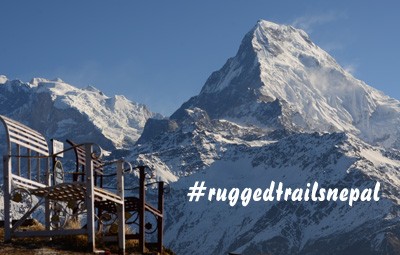
Mardi Himal vs. Poon Hill: Which Pokhara Trek is Right for You? (A Ground-Reality Guide)
When choosing between the Mardi Himal and Ghorepani Poon Hill treks, you first need to understand what each route actually entails and who it is designed for. When travelers arrive in Nepal with limited time or a short holiday schedule, it is only natural to look for the absolute best short trek out of Pokhara. Both of these trails are legendary, but they offer completely different experiences. Here is the unfiltered truth from the ground.
Table of Contents
The Legacy of Ghorepani Poon Hill: The Historic Highway
The Ghorepani route holds a massive legacy in Nepal's trekking history.
The History and Emotional Connection
The trail was formalized as a commercial trekking route in the 1970s. Long before that, in the 1950s, early mountaineering pioneers used this very path during the historic Annapurna expeditions. In the 1970s, local Gurung communities began building the first local huts and small teahouses.
Because of this, the route carries a deep emotional history—much like the classic route from Jiri to Everest Base Camp used by Sir Edmund Hillary and Tenzing Norgay. While the Jiri route has fallen into the shadows today due to the Lukla airport, Jiri is still respected as the original "Gateway to Everest." In the same way, Ghorepani remains the original, classic gateway to the Annapurnas.
Changing Road Access and Modern Realities
In the early days, Ghorepani was not a quick 1- or 2-day getaway; it required a minimum of 5 days round-trip from Pokhara. Today, the nature of the trek has evolved dramatically:
The Traditional Start: Previously, everyone started walking from Nayapul, grinding up the famous steep stone stairs of Tikhedhunga and Ulleri.
The Jeep Options: Today, many trekkers bypass that grueling staircase entirely by taking a jeep directly to Banthanti to start their trek. For those looking for the absolute easiest option, a dirt road now reaches all the way to Ghorepani itself. This has made the mountain views accessible even to those who cannot physically hike.
Shorter Timeframes: While the dirt road and the walking trail are mostly separate, the driving options mean the required trekking days have drastically shrunk.
Infrastructure: From Remote Huts to Mountain Towns
The old teahouses of Ghorepani have upgraded significantly over the decades. They have transformed into proper guest houses and mountain hotels. With attached bathrooms, hot and cold running water, reliable electricity, and good Wi-Fi access, you no longer feel like you are sitting on a remote, isolated ridge. Instead, you are staying in a rapidly developing hill town.
Whether you choose to hike the trail for a traditional trek or drive up for a rugged road trip, both styles offer their own unique joy. While monsoon mud and heavy winter snow can temporarily block the jeep roads, year-round road access is becoming a reality with time. We share these exact ground realities so that travelers with different physical abilities and travel styles can choose what works best for them. Even with the road access, the foot trails remain completely safe and highly scenic.
The True Visual Highlight of Poon Hill
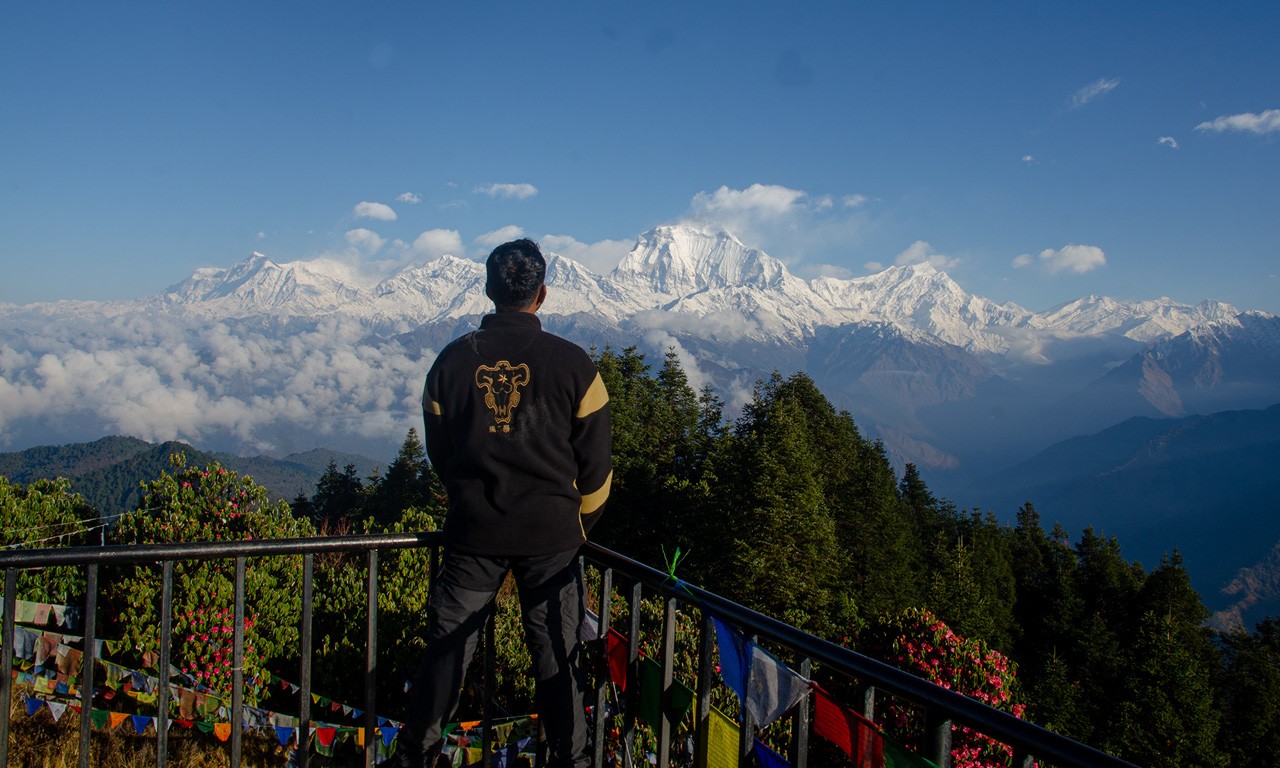
The main draw of this trek has always been Poon Hill Viewpoint (3,210m).
While nature remains unchanged, a few things have naturally shifted over the years—some rhododendron trees have grown massive, while older ones have decayed and fallen. Yet, the timeless beauty of the view remains flawless.
From the top of Poon Hill, you get a sprawling, wide-angle panoramic view of Dhaulagiri, Annapurna South, Hiunchuli, and Machhapuchhre (Fishtail), along with countless other jagged peaks. The magic lies in the sunrise and sunset, which bounce off the snowfaces in shifting shades of gold, pink, and orange. This specific panoramic view is so wide that you cannot replicate it even from the Mardi Himal viewpoints.
Culture and Custom Itineraries
After leaving Ghorepani, the trail winding through Tadapani to Ghandruk Village is exceptionally beautiful. Crossing sections like Thapla Danda brings you face-to-face with Annapurna South and Fishtail, and walking through dense rhododendron forests during the spring season is an unforgettable experience.
Ghandruk itself is globally recognized as one of the most beautiful mountain villages in the world, offering a deep look into local Gurung culture, traditional lifestyles, and hospitality. For anyone with limited time who wants a complete taste of Himalayan nature, culture, and mountain life, this loop is highly recommended for everyone—from young children to senior citizens.
At Rugged Trails Nepal, we have structured these routes into three distinct packages based on traveler preferences:
The 3-Day Express Circuit: Designed for active travelers who want the full loop on a tighter schedule.
The 2-Day Ghorepani Drive-Trek: Strictly for those with very short timeframes or physical limitations. You drive up, spend one night in Ghorepani, hike up to Poon Hill for sunrise the next morning, and drive back to Pokhara.
The Mardi Himal Ridge: A True Pioneer's Perspective
The Mardi Himal Trek is an entirely different beast. It was introduced around 2012 as an offshoot of the Machhapuchhre Model Trek.
Our History on the Mardi Trail
When our team at Rugged Trails Nepal first began trekking Mardi Himal around 2012, there were absolutely no teahouses. We had to coordinate directly with local herders who kept seasonal buffalo and sheep sheds on the ridges just to secure a place to sleep. This popular route literally evolved from rustic shepherd shelters.
In those early days, a local lodge pioneer named Sudip (who was a very close personal friend of ours, and who tragically later passed away in a mountain accident in the area) helped us immensely in promoting the route.
Because of our deep roots here, Rugged Trails Nepal became a true pioneer of this trail. We were the absolute first agency to launch the Mardi Himal Yoga Trek, combining the raw nature of the ridge with outdoor meditation. Later, many other operators copy-pasted our exact yoga itinerary. When there were no promotional photos of Mardi Himal online, our team explored the route, captured the first high-quality photos and videos, and freely shared them with fellow travel operators in Kathmandu and Pokhara to help put this trail on the map. To make planning simple, we offer tailored Shortest 3 Days Mardi Himal Trek options or an extended Mardi Himal Trek 4 Days package to match your exact physical capabilities.
The Trail Reality: Pure Nature, Zero Village Culture
Unlike Ghorepani, Mardi Himal is a pure nature trail.
Many agencies falsely market Mardi Himal as a "culturally rich" trek, but that is simply inaccurate marketing fluff. The proper ridge route does not pass through traditional villages or expose you to local ethnic daily life. It is an isolated, alpine wilderness trail—which is exactly why we originally chose to add Yoga to our itineraries here; the deep silence of the forest fits perfectly with meditation.
Terrain, Views, and Ankle Stability
The trail climbs through Australian Camp, Pothana, and Deurali. Up to Badal Danda, you are mostly walking through deep, peaceful forests. While you catch glimpses of the peaks from spots like Pothana and Deurali, you are largely enclosed by trees.
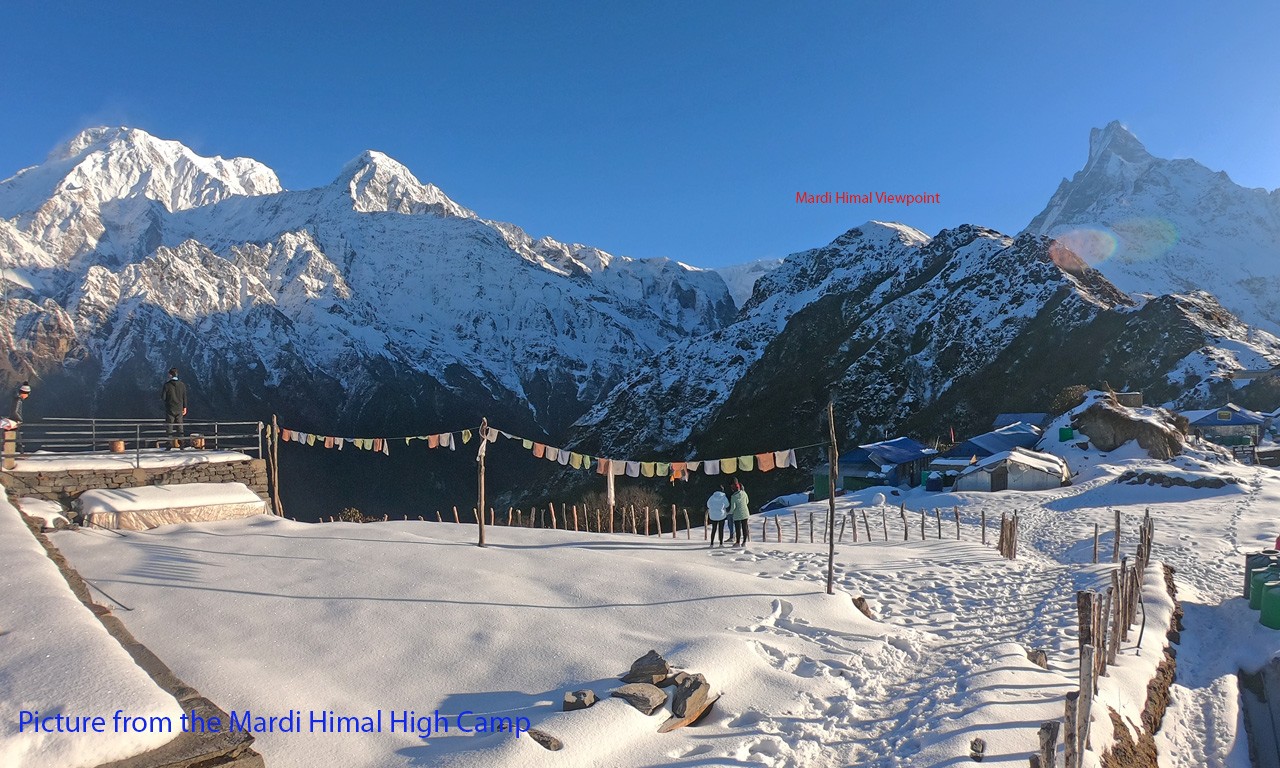
Everything changes roughly 45 minutes above Low Camp when you break out onto Badal Danda (Middle Camp). From this point forward, you are walking directly on an exposed alpine ridge with towering mountains lining the trail right beside you. For photographers, the landscapes from Badal Danda through Middle Camp to High Camp are spectacular. In the spring, the forest glows with red rhododendrons, transitioning into white alpine blossoms further up.
Nose-to-Nose with Fishtail
You cannot compare Mardi Himal to Ghorepani because their visual perspectives are opposites. While Poon Hill gives you a distant panorama, Mardi Himal places you nose-to-nose with the peaks.
Annapurna South, Hiunchuli, and the giant face of Machhapuchhre (Fishtail) are so close that you feel like you are standing directly in their lap.
Teahouse Limits: Proper eco-lodges are only available up to High Camp (3,550m).
The Sunrise Push: The journey to the Upper View Point (4,200m) and the actual Mardi Himal Base Camp (4,500m / 14,764ft) is done as an early morning hike for sunrise. The morning views over the sweeping ridges are deeply memorable.
The Beginner Strategy: If you are a beginner or lack the stamina for steep alpine scree, you do not need to risk pushing all the way to Base Camp. Stopping at High Camp still awards you with staggering, close-up mountain views.
Route Options and Accommodations
There are a couple of ways to access the trail: via Pothana/Deurali, via Kalimati to Forest Camp, or by climbing steeply out of Siding Village. For an in-depth breakdown of these choices, you can explore the comprehensive Mardi Himal trekking route guide on our platform to find the perfect path for your next journey.
Our Recommendation: We highly suggest the Pothana-Deurali or Kalimati routes. We do not recommend starting from Siding for most trekkers because the trail out of Siding is an relentless, punishingly steep climb that ruins the enjoyment for many.
The Kalimati Route: This is a fantastic, short, and sweet option for trekkers with limited time. To make planning simple, we offer tailored 3-day, 4-day, and 5-day itineraries that match your physical capabilities.
Lodging Truths: Do not expect luxury here. Unlike Ghorepani, Mardi Himal lodges generally do not offer attached bathrooms. The rooms are basic, but they are kept neat, clean, and comfortable.
Safety, Amenities, and the Combined Option
We explicitly categorize Mardi Himal as a Moderate Trek rather than an easy one. The trail features several narrow, exposed ridge sections with steep drop-offs. On a guided trip with Rugged Trails Nepal, our professional guides provide direct, hands-on safety management and pathfinding through these tricky spots.
Connectivity and Comfort
Wi-Fi & Power: Wi-Fi is highly unreliable on the Mardi ridge. Electricity is scarce at the higher camps, meaning most lodges rely entirely on solar power (which can run out on cloudy days). However, local mobile networks (NTC and NCell) provide decent data access in various spots along the ridge.
Food & Hygiene: Both the Ghorepani and Mardi Himal routes offer good, hot meals and clean facilities for hot showers.
Safety: Both routes are entirely safe from major landslide hazards and can be trekked comfortably throughout the year.
Weather and Seasons
Naturally, the lower elevations are milder, while the high alpine camps get quite cold. Both trails experience beautiful winter snowfalls, transforming the landscapes completely.
The Verdict: The Ground Truth
Choosing between them comes down to a simple question: Do you want a wide, cultural panorama, or raw, close-up mountain intimacy? As the old saying goes, it’s like asking whether a son or a daughter is better—each has its own unique, incomparable traits. We leave that final choice to your personal travel style.
Choose Ghorepani Poon Hill for rich culture, easy steps, better hotel amenities, and wide-angle sunrise photography.
Choose Mardi Himal for quiet forest trails, a moderately challenging ridge climb, basic alpine lodging, and face-to-face proximity with Fishtail.
Can't Choose? Do Both.
If you have a flexible schedule and want to experience the absolute best of both worlds, you do not have to choose. We offer a 7-Day Combined Mardi Himal & Ghorepani Poon Hill Trek starting and ending in Pokhara, seamlessly blending the historic valleys with the high alpine ridges. To ensure our clients always receive accurate information, the team leaders at Rugged Trails Nepal personally explore and re-verify these trail conditions every single year. We don't just read updates from guides; we walk the dirt ourselves so you always get the right information at the right time.
Want to book your next Himalayan adventure with the pioneers who mapped the trail?
Simply reach out to us anytime via WhatsApp or email. Once you connect with our team, we will handle all the details to ensure your itinerary aligns perfectly with your travel schedule, specific interests, and personal desires before you proceed with the booking process. We guarantee that you will feel like a friend long before you even arrive in Nepal. With our clear, honest information, personal touch, and practical insider tips, you will be fully prepared to truly explore the heart of our country.