Seto Machindranath Rath Yatra: The Living Heritage of Kathmandu
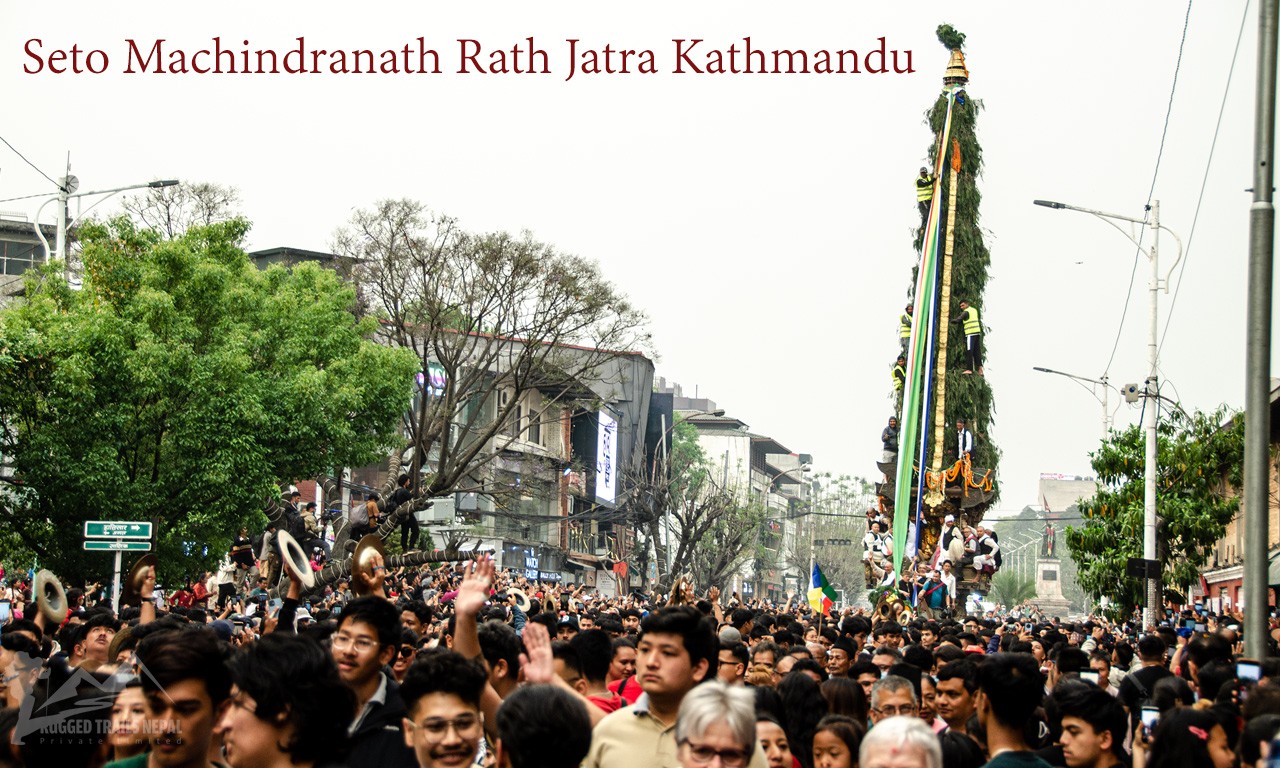
The Seto Machindranath Rath Yatra, also known as the Janabaha Dyo Jatra, is one of Kathmandu's most profound spiritual processions. Dedicated to the deity of compassion, Avalokiteshvara, this festival is more than just a ritual; it is the heartbeat of the ancient Bagmati civilization. Dating back significantly to the 10th century (and popularized in the 17th century), the yatra celebrates the white-faced deity who looks upon his devotees with eternal grace.
The legend tells of King Yaksha Malla, who once captured Yamaraj (the God of Death). To secure his release, Yamaraj prayed to Avalokiteshvara, who emerged from the waters to intervene. The deity instructed the King to build a temple where the Bagmati and Kalimati rivers meet and to conduct an annual chariot procession. To this day, the three-day journey through Jamal, Asan, and Lagan serves as a prayer for longevity, happiness, and divine protection.
The Seto Machindranath Rath Yatra (Janabaha Dyo Jatra) is a multi-day spiritual journey through the heart of Old Kathmandu. In 2026, the main chariot procession is scheduled to take place from April 5th to April 7th (starting on Chaitra Shukla Ashtami).
Here is the day-by-day itinerary of the deity's journey:
| Day | Date (2026) | Route & Activity | Overnight Halt |
| Day 1 | March 26 | The idol is carried from Jana Bahal to Jamal (Teendhara). The procession begins as the chariot is pulled through Bhotahiti to Asan. | Asan |
| Day 2 | March 27 | The chariot moves from Asan through the narrow streets of Indra Chowk and Makhan to reach the historic Durbar Square. | Hanuman Dhoka |
| Day 3 | March 28 | The journey continues from Hanuman Dhoka through Maru, Chikanmuga, and Jaisideval, ending at the southern part of the old city. | Lagan |
| Day 4 | March 29 | The chariot performs three ceremonial rounds of the temple dedicated to the deity's mother located in Lagan. | Lagan |
| Day 5 | March 30 | After a final grand puja and "Snan" (holy bath), the idol is carried back to its permanent home in Jana Bahal in a small palanquin. | Jana Bahal |
Experience the Living Heritage of Kathmandu
The Seto Machindranath Rath Yatra is not just a festival; it is an immersive journey into the soul of the Newari civilization. As the towering 30-foot chariot weaves through the narrow, ancient sun-drenched alleys of Asan and Indra Chowk, you aren't just a spectator—you are part of a thousand-year-old living tradition. From the thunderous salute of the soldiers to the rhythmic chanting of the devotees, this three-day odyssey from March 26 to March 28, 2026, offers a rare glimpse into the heart of Nepal’s spiritual identity.
Join Rugged Trails Nepal
Don't just watch from the sidelines. Immerse yourself in the vibrant colors, ancient legends, and the deep-rooted faith of the Kathmandu Valley. Join Rugged Trails Nepal to experience and explore the festival. Our local experts will guide you through the historic backstreets, explaining the hidden symbolism of the "God of Compassion" and ensuring you have the best vantage point for this once-in-a-lifetime cultural spectacle.