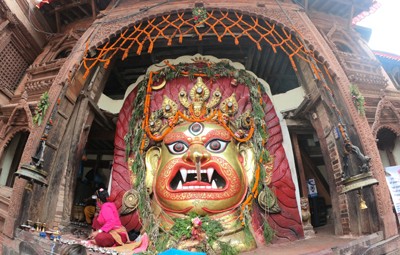
As the winter chill fades and the dry heat of spring approaches, the streets of Kathmandu come alive with the vibrant spirit of Pahan Chare. Known as the festival of hospitality, this ancient Newari tradition is a unique blend of community feasting and deep-rooted mysticism. From the secretive worship of Luku Mahadyo (the "Hidden Shiva") to the rhythmic swaying of goddess chariots, Pahan Chare is a time when the veil between the physical and spiritual worlds thins, inviting everyone to celebrate the bonds of family and the protection of the divine.
Pahan Chare Nepal Festival Guide 2026
Table of Contents
Pahan Chare: The Festival of Hospitality and the Hidden Shiva
Pahan Chare, also known as Pisach Chaturdashi, is one of the most vibrant and culturally significant festivals celebrated by the Newar community in Kathmandu Valley. Falling on the Chaturdashi (14th day) of the waning moon in the month of Chaitra, it marks a time of spiritual cleansing, grand feasts, and the honoring of ancient deities.
The Essence of Hospitality
The name itself reveals the heart of the festival: "Pahan" means guest, and "Chare" refers to the Chaturdashi lunar day. Unlike other festivals where the focus is solely on family, Pahan Chare is a celebration of social bonds. Families invite friends, distant relatives, and married daughters back home for a grand feast, strengthening the ties of love and unity within the community.
Spiritual Significance: The "Hidden Mahadev" (Luku Mahadyo)
A unique aspect of this day is the worship of Luku Mahadyo, or the "Hidden Shiva."
The Ritual: Eight days prior, a small Shiva Lingam is placed in a clean area—often near places where waste is managed—representing Shiva’s "Pisach" (ghoulish) form.
The Offering: On Pahan Chare, the deity is "uncovered," cleaned, and worshipped with unique offerings such as yellow mustard, garlic plants, and traditional Newari liquor (Aila).
The Symbolism: This ritual honors Shiva as the lord of all beings, including spirits and ghosts, seeking protection against diseases and disasters during the transition from winter to summer.
The Legend of the Seven Ajimas (Goddesses)
The festival is deeply tied to the Ajimas (Protector Grandmother Goddesses). Chariots (Khats) of various goddesses like Nhyaykantala Ajima, Lummadhi Ajima, and Kanga Ajima are paraded through the streets of Kathmandu with music and traditional dances.
- Major Festivals of Nepal (Kathmandu)
The Story of Indrayani (Luti Ajima): Legend tells of Indrayani, who was once poor and humiliated by her wealthier sisters during a feast. Heartbroken, she left, but her luck changed when a pumpkin she bought miraculously turned into gold. When she returned to the feast the following year as a wealthy woman, her sisters treated her with newfound respect. Realizing their devotion was to her wealth rather than herself, she left in protest. Consequently, Indrayani’s chariot is not paraded during Pahan Chare; she is worshipped separately four months earlier during Bala Chaturdashi.
The Connection to Ghode Jatra
Pahan Chare serves as the spiritual prelude to Ghode Jatra (The Festival of Horses), held the following day.
The Myth: Horses are raced at Tundikhel to trample the demon Gurumapa, ensuring he remains buried underground and cannot harm the city's children.
Historical Rivalry: In Nepal Sambat 787, King Pratap Malla of Kathmandu and King Shree Niwas Malla of Patan had a falling out. To prevent his citizens from traveling to Kathmandu to see the races, the King of Patan started a separate horse racing tradition in Patan’s Bholakhel.
Why This Festival Matters Today
Beyond the rituals, Pahan Chare is a masterclass in community resilience. It marks the end of the lunar year's final Chaturdashi, acting as a seasonal prayer for health before the dry summer heat arrives. Through masked dances, vibrant chariot processions, and shared meals, the Newar community preserves a legacy of inclusion and spiritual protection.
- Pahan Chare Festival Date: 20 March, 2026
Conclusion
Pahan Chare is far more than just a date on the lunar calendar; it is a living testament to the resilience and warmth of Newari culture. By honoring the "Hidden Shiva" and welcoming guests with open hearts, the community ensures that ancient legends—like the pride of Indrayani and the subduing of the demon Gurumapa—continue to resonate today. As the chariots return to their shrines and the grand feasts conclude, the festival leaves behind a renewed sense of unity and spiritual safety, perfectly setting the stage for the thunderous horse races of Ghode Jatra.