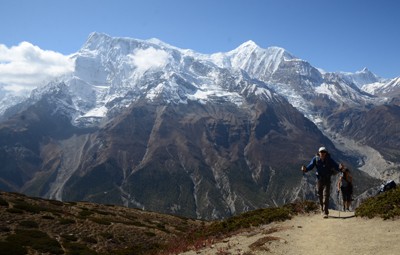
Nar Phu Valley Trek: Nepal’s Raw and Forgotten Wilderness. When people talk about trekking in Nepal, names like Everest and Annapurna steal the spotlight. But hidden quietly in the high mountain deserts of the north-west lies Nar Phu Valley—a place that feels less like a trek and more like stepping back through time.
Let's celebrate together "Visit Nepal 2026", Get amazing discounts for group travelers!
- Duration10 Days
- Price from$1420/ person
- Difficulty LevelStrenuous
- Max Altitude5,320 m
If you’ve ever wondered what the Himalayas felt like before modern tourism, Nar Phu is your answer. Because of its dry, dramatic terrain, walking into this valley feels like crossing into a lost Tibetan plateau. It’s a restricted region, much like Manaslu, Upper Mustang, or Dolpo, protected by both geography and local culture.
For years, only a handful of trekkers explored this area on expensive, fully-catered camping expeditions. Today, things have opened up just enough. Small teahouses, campsites, and local homestays make it accessible, but without losing the quiet, untouched soul that makes it special.
What Makes Nar Phu So Unique?
A Living Ancient Civilization: Nar Phu isn't just about high-altitude hiking; it’s an immersive experience in traditional Tibetan Buddhist culture. The villages here—especially Phu Gaon and Nar—look like they were sculpted right out of the canyon walls.
Houses are built from stone and mud-brick, stacked closely together with flat roofs designed to trap heat, block biting winds, and dry firewood for the long winter. Colorful prayer flags flutter from tall wooden poles on every roof, sending peaceful mantras drifting across the valley. The local Manangi Gurung people have preserved their way of life for centuries, living quietly alongside ancient monasteries (Gombas) carved into the cliffs.
If you happen to pass through during Yartung, you’ll see the village come alive with traditional horse racing, archery, and ancient festivals timed with the Tibetan lunar calendar, like Lhosar.
Unspoiled Mountain Views & Wildlife
The trekking trail leads you right along the gravelly riverbanks of the Nar River, carved out by glacial melt over hundreds of years. The views along the way are raw and intimate:
- Annapurna I, II, and IV looming close above the horizon.
- Gangapurna, Khangsar Kang, Himlung Himal, and Pokarkhang framing the sky.
- Dense pine and juniper forests giving way to vast alpine meadows.
Because the region remains so quiet, it’s a natural refuge for wildlife. It’s not uncommon to spot Blue Sheep (Bharal) or Himalayan Tahrs grazing on steep crags, and if you're extraordinarily lucky, traces of the elusive Snow Leopard. Come spring, bright red rhododendrons light up the lower trails.
The Journey: How the Route Unfolds
Getting to the Gateway: The adventure starts with a drive from Kathmandu or Pokhara through Beshisahar, following the roaring Marshyangdi River up to Dharapani and eventually Koto. Koto is the turning point: this is where you leave the popular Annapurna Circuit crowds behind and plunge into the quiet wilderness of Nar Phu.
Deep into the Valley & Crossing Kang La
From Koto, the trail winds through narrow gorges and remote hamlets like Meta and Kyang, leading up to Phu Gaon. The absolute highlight—and hardest test—of the trek is crossing Kang La Pass (5,320 meters). It’s a steep, demanding climb, but reaching the crest rewards you with one of the most breathtaking, panoramic views in the entire Annapurna region.
When to Go
Spring (March – May): Bright, clear days, blooming flowers, and great temperatures for walking.
Summer / Monsoon (June – August): Surprisingly, yes! Nar Phu lies in a high-altitude rain shadow. While the rest of Nepal gets heavy monsoon rains, this dry plateau stays mostly dry, making it one of Nepal’s rare summer trekking spots.
Autumn (September – November): The absolute prime season. Crisp air, crystal-clear mountain views, and ideal trail conditions.
Winter (December – February): Not recommended. Local villagers migrate down to escape the freezing cold, high passes like Kang La become dangerously snowbound, and tea houses close down.
Nar Phu Valley Trek Itinerary:
Day 1: Pokhara / Kathmandu Drive to Koto 2630M (230km) 9/10 hours drive.
Day 2: Koto Trek to Meta 3570m via Chhumchu 15km 7 hours walk.
Day 3: Meta Trek to Kyang 3720m via Chyako 10km 4 hours walk.
Day 4: Kyang to Phu Village 4050m 8 km 5 hours walk
Day 5: Phu Village Excursion.
Day 6: Phu Village trek to Nar Phedi 3550m 15km 7 hours walk.
Day 7: Nar Phedi trek to Nar Village 4150m 5km 3 hours walk.
Day 8: Trek to Ngawal 3675 via Kang La Pass 5320m. 15 km 8-9 hours walk.
Day 9: Trek to Manang Village 3540m from Ngawal 9km 4 hours walk.
Day 10: Manang Drive to Kathmandu or Pokhara.